This is an analysis of how right-wing authoritarianism specifically gets produced through digital infrastructure. Similar mechanisms may operate elsewhere on the political spectrum, but we focus here on right-wing radicalization. What follows is partial, potentially useful, necessarily incomplete, and shaped by the same forces it attempts to reveal. Real power (probably) doesn't operate with engineering precision: billionaires compete with each other, algorithms misfire, movements fracture, capital flows reverse. We impose systematic coherence on what is (probably) chaotic, contradictory, and extremely opportunistic.
The Technofascist Assemblage: How Digital Capitalism Industrializes Authoritarianism
Introduction: Beyond Ideology, Toward Infrastructure
“The winner takes it all (takes it all)
The loser has to fall (has to fall)
It's simple, and it's plain (it's so plain)
Why should I complain? (Why complain?)”
Abba
We are witnessing not simply the return of fascism but the emergence of an entirely new political technology. What we might call "technofascism" represents the evolutionary convergence of three previously separate systems: the affective machinery of classical fascism, the extractive logic of late capitalism, and the behavioral modification infrastructure of digital platforms. This convergence has produced something unprecedented—an automated system for converting human suffering into authoritarian political power.
The conventional analyses fail because they treat this phenomenon as primarily ideological, focusing on beliefs, rhetoric, and explicit political programs. But technofascism is better understood as infrastructure: a material assemblage of algorithms, capital flows, psychological vulnerabilities, and institutional networks that operates with industrial efficiency to manufacture authoritarian subjects at scale. Understanding this system requires mapping not just what people believe, but how those beliefs are systematically produced through the intersection of economic precarity, technological mediation, and emotional manipulation.
The question is not only "why do people embrace authoritarianism?" but rather "how has a machine been constructed that makes authoritarianism feel like the only available response to real suffering?" This machine has a specific architecture, identifiable components, and traceable flows of capital and influence. It can be mapped, analyzed, and potentially interrupted.
The Production Layer: Manufacturing Subjects Through Systematic Humiliation
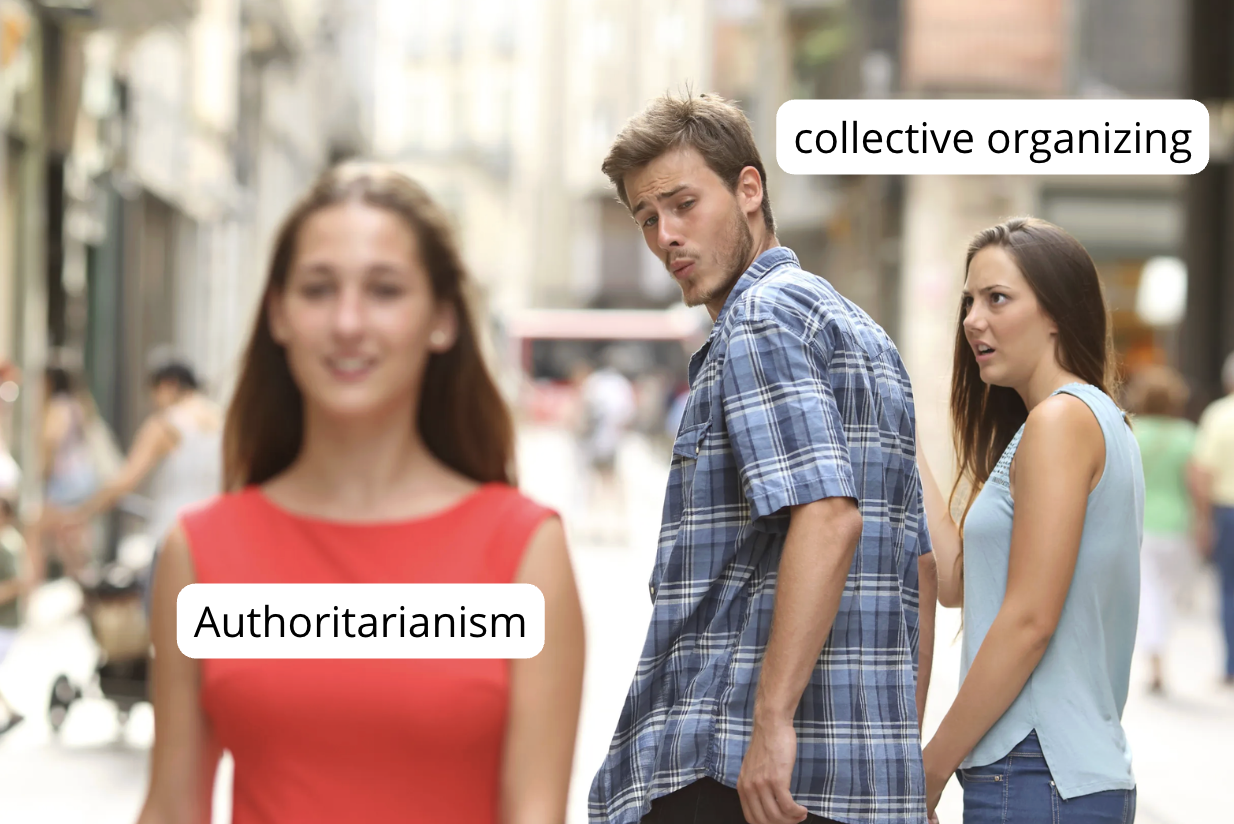
At the foundation of the technofascist assemblage lies what we might call the humiliation engine—the systematic production of a particular kind of suffering specifically suited for authoritarian capture. Neoliberalism has not failed; it has succeeded perfectly at its actual function: redistributing suffering downward while concentrating power upward, all while ensuring that suffering is experienced as individual moral failure rather than collective exploitation.
The contemporary subject emerges from this system already wounded in specific ways. Economic precarity is not merely material poverty but existential insecurity—the gig worker who cannot plan beyond the next week, the indebted graduate working retail, the renter one rent increase from homelessness. This precarity generates a particular psychological profile: desperate need for recognition combined with systematic denial of legitimate pathways to dignity. The neoliberal order tells everyone they can be exceptional while structurally ensuring most will fail, then frames that failure as personal inadequacy.
This produces what we might call the narcissistic wound—a deep injury to self-worth that demands compensation. Traditional institutions (unions, stable communities, political parties, churches) that once allowed collective processing of such suffering have been systematically dismantled. In their absence, individuals are left alone with their shame, searching desperately for explanations that don't indict them personally and for forms of recognition that feel achievable.
The genius of the system is that it produces subjects pre-adapted for authoritarian capture. Someone experiencing precarity as personal failure is vulnerable to narratives that externalize blame. Someone denied legitimate recognition is susceptible to forms of superiority based on exclusion—racial, national, gender-based. Someone atomized from collective institutions is hungry for any form of belonging, even if toxic. The humiliation engine doesn't accidentally produce fascist subjects; it manufactures them with industrial precision.
This pattern becomes particularly visible among young men from formerly secure working or lower-middle-class backgrounds, though they are far from the only demographic experiencing this dynamic. They inherit expectations of stable employment, family formation, and social status that are now structurally impossible for many. This creates a specific grievance structure: the world promised me these things, something has stolen them, someone must pay. The manosphere—from Men's Rights Activists through Pick-Up Artists to the violent nihilism of incel communities—represents organized responses to this manufactured crisis, each offering different explanations and solutions but all channeling genuine suffering toward politically useful targets.
The material conditions matter because they explain why the pipeline works. It's not primarily about "brainwashing" or "propaganda" in traditional senses. Rather, the system offers the humiliated subject something valuable: an explanation for their pain that doesn't require accepting they are worthless, and a path to dignity that feels achievable even if destructive. "You're not failing because you're inadequate; you're failing because women/immigrants/elites are rigging the system against you. Join us and reclaim what's rightfully yours." This message resonates not because people are stupid but because it addresses real suffering with emotionally satisfying answers.
The Technological Layer: Algorithms as Sorting Mechanisms for Human Vulnerability
If the production layer generates wounded subjects, the technological layer identifies and processes them with algorithmic precision. Platform capitalism has developed sophisticated systems for detecting emotional vulnerability and delivering targeted interventions designed to channel distress toward profitable—and increasingly political—ends.
The mechanism is elegant in its brutality. Algorithms monitor behavioral signals indicating psychological vulnerability: increased time on platform, search queries suggesting crisis, engagement patterns showing distress. When vulnerability is detected, the system intervenes not with support but with content specifically calibrated to provide emotional relief while introducing ideological frameworks. Someone searching for relationship advice gets served material about "red pill" truths. Someone experiencing economic anxiety encounters content about immigrant job theft. Someone feeling meaningless discovers influencers promising awakening to hidden truths.
This is not traditional propaganda because it doesn't feel like propaganda. The initial content genuinely helps—fitness advice actually improves health, entrepreneurship content provides real business knowledge, self-help material offers useful psychological tools. But each piece of helpful content comes bundled with small ideological fragments: a joke about "woke" culture, a casual mention of declining masculinity, an assumption that feminism has gone too far. These fragments accumulate imperceptibly, like radioactive exposure. By the time the subject has assembled a coherent fascist worldview, it feels like personal discovery rather than external imposition.
The platform economic model structurally biases toward this outcome. Platforms profit from engagement, measured in time-on-site and interaction frequency. Research consistently demonstrates that content provoking negative emotions—fear, anger, disgust, resentment—generates more engagement than content promoting understanding or nuance. Outrage spreads faster than analysis, conspiracy theories viral where fact-checks languish. Therefore, algorithmic optimization for engagement automatically optimizes radicalization[1].
Billionaire ownership exacerbates structural tendencies into deliberate policy. Elon Musk's Twitter purchase allowed direct algorithmic manipulation to amplify chosen voices while suppressing others. Mark Zuckerberg's elimination of fact-checking on Meta platforms represented explicit choice to prioritize engagement over accuracy. These aren't aberrations but logical expressions of the system's core drive: extract maximum value from human attention regardless of social consequences.
The fragmented distribution strategy represents a sophisticated evolution beyond traditional propaganda. Instead of presenting complete fascist ideology that would trigger resistance, the system distributes fragments across seemingly unrelated domains. Fitness content promotes biological essentialism and Social Darwinism. Entrepreneurship material advances extreme individualism and anti-solidarity. Relationship advice channels misogyny into systematic worldview. Skepticism content builds distrust of institutions and expertise. Each fragment seems harmless individually; their combination produces comprehensive authoritarian orientation.
This works because it exploits cognitive limitations. Humans struggle to track cumulative ideological drift. We notice sudden changes but adapt imperceptibly to gradual ones. Someone who would reject explicit neo-Nazi propaganda finds themselves six months later casually repeating fascist talking points, unable to identify the moment they changed because there was no single moment—just accumulated micro-doses of ideology packaged as self-improvement.
Algorithmic radicalization its optimized at vastly greater scale through coordinated bot networks. Bots generated approximately 20% of 2016 US election tweets and 32% of Brexit referendum traffic. Bolsonaro's 2018 campaign deployed massive WhatsApp bot networks distributing content to millions. Milei's Argentine victory involved documented bot amplification across multiple platforms. The mechanism is simple: bots artificially boost content into trending algorithms, real users see "trending" topics and engage authentically, their genuine engagement sustains viral spread. A post with 50 real interactions gets bot-boosted to appear as 5,000, triggering platform recommendations that reach millions more. Bot networks also flood comment sections creating false consensus, mass-report opposition content to trigger automated moderation, and provide early amplification that encourages influencers to create similar material. The infrastructure manufactures social proof—making fringe positions appear mainstream—while costing a fraction of traditional organizing.
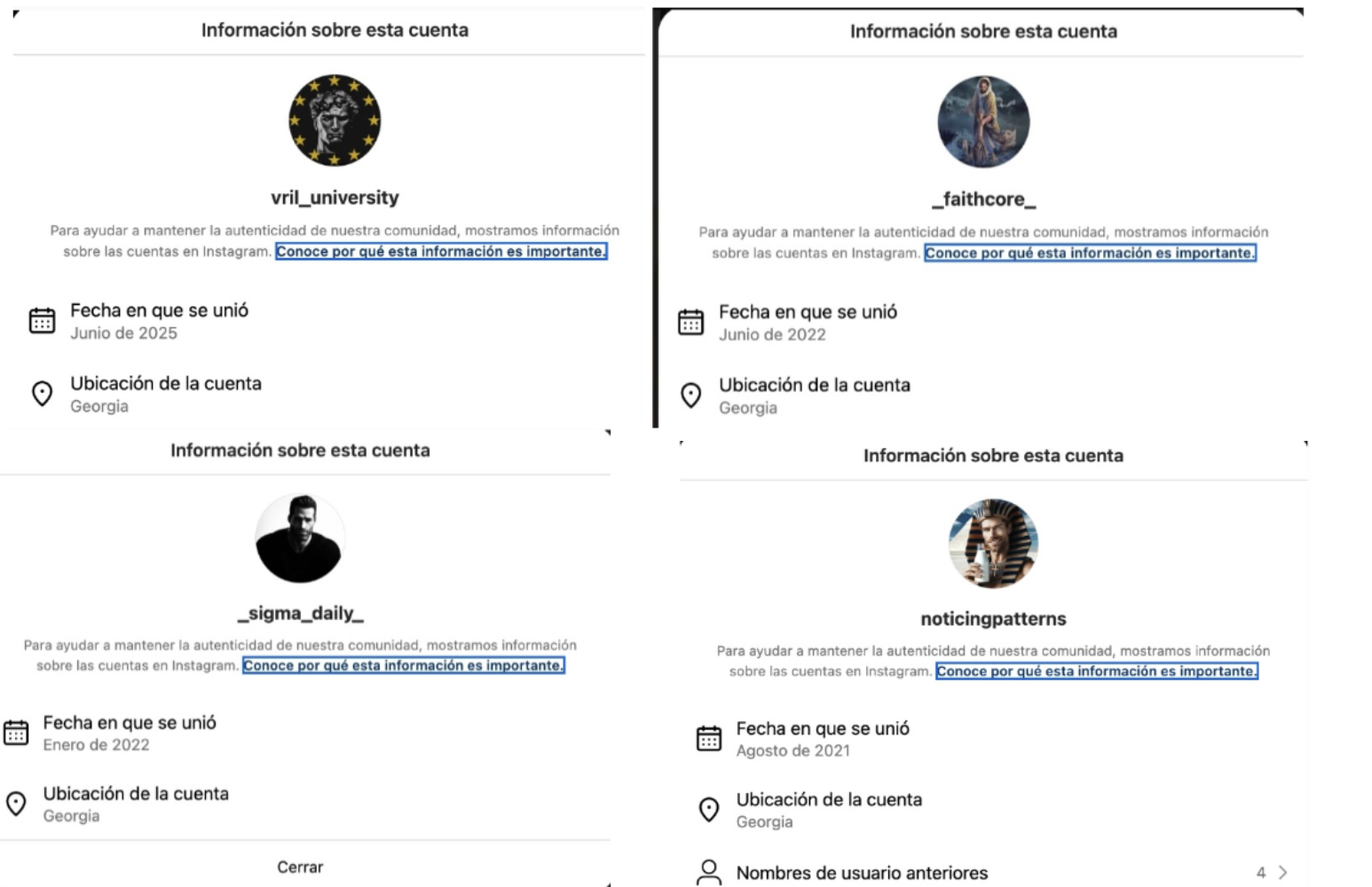
alt-right instagram meme accounts located in georgia
The Financial Layer: Following Capital to Understand Coordination

The technological infrastructure doesn't operate autonomously but serves specific material interests backed by identifiable capital flows.
At the apex sit tech billionaires whose wealth derives from platform capitalism and whose political interests align with preventing regulation, taxation, or redistribution. Peter Thiel represents the ideological vanguard, explicitly arguing in his 2009 Cato essay that democracy and freedom are incompatible, that women's suffrage harmed capitalism, and that alternatives to democratic governance must be developed. His investments materialize this philosophy: over $50 million documented support to think tanks and politicians, including $15 million for JD Vance's Senate campaign that placed his protégé as Vice President.
Elon Musk embodies the platform capture strategy. His $44 billion Twitter purchase provided direct control over a major communication infrastructure, allowing algorithmic manipulation to amplify preferred voices. His $291 million in 2024 political spending focused on direct campaign contributions rather than institutional support, revealing preference for immediate political control. His Department of Government Efficiency role represents the ultimate fusion—billionaire directly implementing policy agenda within government machinery.
But tech money operates alongside traditional conservative capital infrastructure. The Koch network, built on petroleum wealth, spent $157 million through Americans for Prosperity in 2024 alone, more than triple its 2020 level. Koch funding flows through deliberately opaque channels: foundations fund DonorsTrust, which funds think tanks, which fund local organizations, obscuring original sources while maintaining ideological coherence across the chain.
This capital doesn't merely support existing movements but constructs infrastructure. The Atlas Network, with $28 million annual budget and 581 partners across 103 countries, operates as global franchiser of libertarian authoritarianism. It identifies local entrepreneurs wanting to establish free-market think tanks, provides seed funding ($5,000-$10,000 grants), offers training through Atlas Network Academy, connects partners through regional Liberty Forums, and guides organizations toward financial independence while maintaining ideological alignment.
The Latin American operation demonstrates effectiveness. Argentina's Javier Milei emerged from the ecosystem of Atlas partners—Fundación Libertad, Instituto Libertad y Progreso, Fundación Atlas 1853—with key advisor Alberto Benegas Lynch connecting to both Atlas and Mont Pelerin Society. Ecuador's Guillermo Lasso founded Ecuador Libre, won Atlas's Templeton Freedom Award, and later became president. Brazil's Movimento Brasil Livre, trained by Atlas, mobilized millions in protests that led to President Dilma Rousseff's impeachment and ended 13 years of Workers' Party governance. In Mexico, figures like Eduardo Verástegui and businessman Ricardo Salinas Pliego exemplify the cultural and financial convergence of religious conservatism and neoliberal media power. Verástegui, a celebrity turned political actor, translates Atlas-style libertarian narratives into moral crusades, while Salinas Pliego’s media empire (TV Azteca, Banco Azteca) serves as amplification infrastructure for reactionary populism aligned with transnational networks like Atlas and Heritage.
The funding sources reveal whose interests this serves. The tobacco industry gave Atlas $475,000 in 1995 specifically for Latin American operations, plus $275,000 in 1994 for "Tobacco Issues Management." The Fossil fuel industry provided over $1 million through ExxonMobil. Internal Philip Morris memos describe Atlas as a "strategic ally" valued for maintaining the appearance of "independence" to avoid "scandal"—revealing explicit strategy of using think tanks to launder corporate interests disguised as independent research.
The revolving door completes the circuit. Heritage Foundation provided 66+ personnel to Trump's first administration. Project 2025 architects now hold key second-term positions: Russell Vought directing OMB, Tom Homan as border czar, Stephen Miller in senior roles. The pattern is clear: a think tank develops policy agenda, billionaires fund its implementation, the personnel move seamlessly between institutions and government, policies serve donor class interests while presented as grassroots movements or intellectual consensus.
Tying these ends doesn’t require the work of a conspiracy theorist, their infrastructure is transparent enough for anyone interested enough in tracing their path and following the money. The coordination doesn't require secret meetings in smoke-filled rooms: it operates through shared class interests, institutional incentives, and ideological alignment produced by common funding sources and overlapping networks. The Atlas Liberty Forums, Mont Pelerin Society conferences, Heritage Foundation events,all of these create spaces where Brazilian agribusiness executives, Argentine libertarian intellectuals, Koch network operatives, and fossil fuel lobbyists coordinate strategy while maintaining plausible deniability about explicit coordination.
The Emotional Layer: Engineering Affect for Political Capture
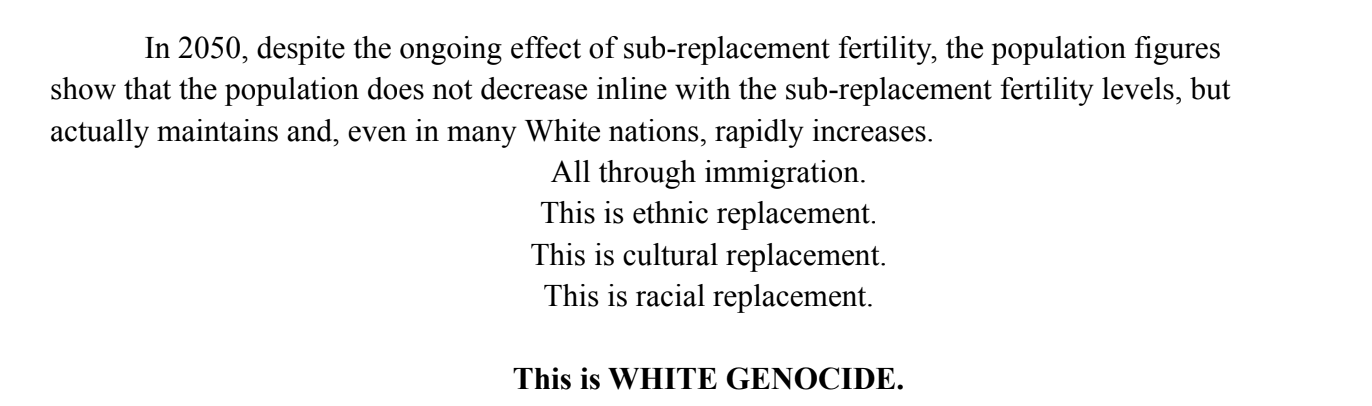
From the manifesto of Payton Gendron, the perpetrator of the May 14, 2022 mass shooting at a Tops Friendly Markets supermarket in Buffalo, New York.
The production of humiliation and identification of vulnerability would remain inert without mechanisms that emotionally activate them toward authoritarian objectives. This is where classical fascist emotional technology[a][b] merges with contemporary psychological manipulation.
The system [c][d]operates through four primary affective valves, each converting a different emotional state into political utility. Fear suspends critical thinking and enables acceptance of exceptional measures. The construction of existential threats—immigrant "invasion," civilizational collapse, elite conspiracies—creates urgency and justifies authoritarian response, despite authoritarianism itself constituting an existential threat. The Great Replacement theory exemplifies this: taking legitimate anxieties about economic change and reframing them as genocide requiring militant defense. Tucker Carlson's 400+ Fox News references to this theory demonstrate its mainstream penetration.
This manufactured disgust establishes unbridgeable boundaries between "us" and "them," making violence seem hygienic rather than cruel. Fascist movements hijack these evolved pathogen-avoidance responses, applying disgust mechanisms to social groups. When immigrants are described as "infestation," progressives as "diseased," or LGBTQ+ people as "corrupting," they trigger visceral rejection bypassing rational consideration. The language makes exclusion and violence feel like cleansing—not attacking people but purifying society.
Resentment provides the nuclear core. The system takes legitimate rage against structural injustice and alchemically transmutes it into hatred towards other victims. This requires two simultaneous operations: making actual power sources (financial elites, corporations, policy architects) mediatic invisibles who barely appear in narratives,[e][f] while hypervisibilizing vulnerable groups (immigrants, minorities, "undeserving" poor people) as projection screens for all social frustration.
This works because attacking downward is psychologically safer than attacking upward. The powerful retaliate; the powerless cannot. Moreover, finding someone "beneath" oneself provides status compensation for one's own humiliation.[g][h][i] The false moral economy sustaining this treats poverty as moral failure, violence as cultural pathology[j][k] (where racial superiority has been transposed into cultural superiority), inequality as a natural merit outcome—allowing people to feel morally superior while maintaining structures that produce suffering.
Nationalism seduces its enthusiasts by offering narcissistic compensation for individual powerlessness. When personal achievement becomes structurally impossible, identification with the grand collective provides substitute grandeur: "I may be failing, but I'm part of the Master Race/Western Civilization/Real Americans." This requires glorified past ("we were great"), fallen present ("we've been degraded"), and redemptive future ("we will be great again"). The content matters less than the boundary-marking creating insider/outsider distinction.
What makes contemporary emotional engineering distinct is its integration with algorithmic systems. Historical fascism relied on mass rallies, charismatic leaders, and state propaganda apparatus. Digital authoritarianism distributes this across millions of micro-interactions personalized to individual psychological profiles. The algorithm identifies which emotional valve works best for each subject—some respond more to fear, others to disgust, others to resentment—and delivers targeted content accordingly.
The influencer network operationalizes this. Rather than a single propaganda ministry, thousands of content creators operate as distributed emotional processors. Each one specializes in a particular affective register and audience demographic. Joe Rogan provides a seemingly apolitical gateway for young men to gradually normalize extremism. Jordan Peterson offers a pseudo-intellectual framework that channels masculine anxiety towards anti-feminist reactionism. Fitness influencers naturalize biological essentialism by trickling drops of Social Darwinism in their all-natural, all-organic messages of purity. Relationship coaches systematize misogyny while masquerading antisocial copes as dating strategy.
These operate as ideological fragments—each one containing fragments of a fascist core hidden under a different form. The distribution prevents identification of coordinated propaganda while enabling cumulative radicalization. Someone consuming fitness, entrepreneurship, and relationship content from different sources doesn't realize they're receiving consistent ideological programming because it arrives as practical advice rather than political doctrine.
The emotional capture culminates in what we might call the paradox of functional rebellion. The system engineers subjects who feel rebellious while being completely functional for power. They rebel against "political correctness," "woke ideology," "mainstream media"—all targets that don't threaten capital accumulation or structural hierarchy. Meanwhile they embrace positions perfectly aligned with elite interests: deregulation, anti-union stance, climate denial, opposition to redistribution.
This is achieved through synthetic emancipation—offering liberation from social norms while maintaining economic structures producing actual oppression. People experience catharsis in refusing pronouns, mocking social justice, embracing "politically incorrect" speech, rejecting institutional expertise, and they call this freedom. But this "freedom" carefully avoids challenging power, questioning wealth concentration, organizing collective resistance, or redistributing resources (Funny enough, liberal identity politics also provides cathartic transgression while avoiding structural challenge. Corporate Pride sponsorships, diversity initiatives that don't redistribute wealth, pronoun declarations that coexist with union-busting, land acknowledgments followed by nothing - all this produces the feeling of radical politics while leaving capital accumulation untouched). Rebellion becomes a market niche; you can buy your way to being a rebel through subscribing to banned influencers, wearing anti-woke merchandise, and consuming "uncensored" content.
The Aesthetic Layer: Irony as a shield

The emotional engineering described above doesn't operate through naked propaganda but through aesthetic capture—the co-option of human sensory pleasure in service of authoritarian ends. Contemporary right-wing radicalization spreads not primarily through manifestos or explicit ideology but through memes, music, imagery, and style. This aesthetic infrastructure works with particular efficiency because it operates below the threshold of conscious political engagement, recruiting through pleasure before announcing its politics.
The right-wing online ecosystem has developed sophisticated (though the very bad taste) visual and cultural language that functions simultaneously as in-group signaling, recruitment mechanism, and protective irony shield.
Agartha , the hollow earth mythology, encoding fascism as hidden knowledge. Pepe and Wojak variations provide emotional templates that make political affects feel universal and natural. The "doomer" wojak encodes hopelessness as inevitable and depoliticized. The "trad wife" versus "modern woman" comparison naturalizes patriarchal gender roles through contrast memes. Roman statues and classical imagery frame white supremacy as civilization itself. Marble busts (historically painted, now presented as pure white) become visual shorthand for European superiority. Crusader and Templar iconography transforms religious warfare into romantic masculinity. Knights in armor, "Deus Vult" slogans, crosses and swords—the medieval imagery packages Christian nationalism as heroic resistance. Sigma male and gigachad edits naturalize hierarchy and domination through evolutionary psychology aesthetics. Perfectly chiseled jaws, cold stares, wealth and power presented as biological destiny.
Vaporwave and synthwave appropriation demonstrates how aesthetics migrate across political boundaries. Vaporwave emerged as an ironic critique of capitalism—pastel colors, 80s corporate imagery, glitch art, Roman busts used to mock consumer culture. The far-right appropriated these exact aesthetics but stripped the critique, keeping only the nostalgia. Same visuals, opposite politics. The Gigi D'Agostino phenomenon exemplifies this mechanism. "L'amour Toujours"—a 2000 Eurodance track about eternal love—has been systematically appropriated by far-right movements across Europe. In German-speaking countries, the song plays at gatherings where crowds chant racist slogans in rhythm. The track has been used in hundreds of videos depicting ethnic violence, deportation fantasies, and nationalist celebrations.
Perhaps the most defining aspect of right-wing aesthetic infrastructure is its systematic deployment of irony as shield and weapon simultaneously.The mechanism works through nested layers of plausible deniability:
"It's just a meme" Any individual image can be defended as humor, not ideology. The Pepe with swastika? Just edgy humor. The "Hitler was right" joke? Just transgressive comedy.
"I'm making fun of you for taking it seriously" When challenged, the response isn't defense but counter-mockery. "Imagine being triggered by a cartoon frog." The critic becomes target, accused of humorlessness, oversensitivity.
"Actually, you're the real fascist for trying to censor humor" The irony inverts completely. Calling out fascist imagery becomes the real fascism. Demanding accountability becomes authoritarianism.
This ironic structure provides perfect protection because sincerity and irony coexist without contradiction. The irony allows simultaneous recruitment and deniability. For the already-convinced, the "jokes" signal shared ideology. For the uncertain, they provide gentle introduction—you're just laughing at edgy memes, not embracing fascism. For critics, they provide shield—"we're just trolling."
But the critical question: Does ironic fascism become sincere fascism? for some, yes; for others, irony persists indefinitely; for many, the question becomes meaningless because behavior is identical regardless of sincerity or the lock of. Someone who "ironically" posts white supremacist memes, "ironically" attends far-right events, "ironically" harasses minorities, and "ironically" votes for fascist parties is functionally indistinguishable from sincere fascist.
The permanent irony state enables conviction without “commitment”, participation without “responsibility”, fascism without self-identification as fascist (thought many ironically, or even post ironically identify as fascist).

The Integration: How the Assemblage Functions as Unified System
The power of technofascism emerges not from individual components but from their integration into a self-reinforcing system. The circuit operates continuously:
Existential precarity produces psychologically wounded subjects experiencing their suffering as personal failure. Platform algorithms detect behavioral signals indicating emotional vulnerability. Targeted content is delivered providing genuine initial value (practical advice, community connection) while introducing ideological fragments. Repeated exposure accumulates fragments into a coherent worldview positioning the subject's suffering as a result of specific group actions rather than structural conditions. Emotional activation (fear/disgust/resentment) channels energy toward identified scapegoats. Political mobilization converts emotional energy into votes, harassment, violence. Resulting chaos justifies further authoritarian measures, which generate more precarity, completing the loop.
Each component amplifies others. Material precarity makes subjects more vulnerable to emotional manipulation. Algorithmic targeting makes propaganda more effective. Financial backing ensures continuous content production. Emotional activation generates engagement data improving algorithmic targeting. Political success attracts more funding and legitimates the ideology. The system is auto-catalytic—each crisis it generates provides fuel for the next cycle.
The assemblage has achieved something historically unprecedented: Where historical fascism required charismatic leaders, mass rallies, and state apparatus, digital authoritarianism operates through distributed networks of influencers, automated algorithmic systems, and market mechanisms. It's simultaneously more resilient (no single point of failure) and more adaptive (continuous optimization through engagement data) than previous authoritarian forms.
Atlas Network coordinates 581 think tanks across 100+ countries. Platform algorithms process billions of interactions daily, each opportunity for radicalization. Billionaires deploy hundreds of millions in political spending. The machine operates globally, 24/7, processing human suffering into political power with industrial efficiency.
Yet the system's very sophistication creates vulnerabilities. Its dependence on platform infrastructure means it can be disrupted through regulation or alternative platforms. Its financial flows can be traced and exposed. Its emotional manipulations can be recognized and countered. Its material foundation—the production of precarity—can potentially be addressed through economic transformation. Understanding the machine as an integrated system reveals intervention points that weren't visible when components were analyzed separately.
Toward Interruption: Multi-Level Intervention Strategy
Effective resistance must address all layers simultaneously—treating symptoms at any single level while ignoring others allows the system to adapt and reconstitute itself.
At the material level, the foundation is interrupting humiliation production. This requires economic transformations ensuring dignified existence isn't contingent on competitive success: universal basic services guaranteeing housing, healthcare, education; strong labor organization rebuilding collective power; shortened work weeks allowing community participation; legitimate pathways to recognition not dependent on dominating others. These aren't charitable reforms but systematic elimination of conditions producing subjects vulnerable to authoritarian capture.
The technological layer requires both regulation and alternatives. Platform regulation must mandate algorithmic transparency, prohibit engagement-maximizing optimization, require user control over recommendation systems, treat platforms as public utilities subject to democratic oversight, and break monopolies reducing capture risk. But regulation alone is insufficient—we need alternative infrastructures: federated social networks resistant to billionaire capture, cooperative platforms owned by users, public digital infrastructure treating communication as right rather than commodity.
The financial layer demands exposure and redirection. Investigative journalism tracking capital flows makes coordination visible, reducing plausible deniability. Tax policy preventing billionaire accumulation limits authoritarian capture capacity. Campaign finance reform restricts direct political spending. Think tank funding transparency exposes corporate interest laundering. International coordination prevents jurisdiction shopping. These interrupt the financial circuits enabling global authoritarian infrastructure.
The emotional layer requires counter-programming at scale. This means creating content that addresses the same legitimate grievances but channels energy toward structural transformation rather than scapegoating. BreadTube demonstrates potential—influencers like Hasan Piker, Joshua Citarella, Tilly Middlehurst and Zina Ikeme explicitly deradicalizing alt-right casualties by offering alternative explanations for suffering that indict systems rather than vulnerable groups.
Educational intervention builds cognitive immunity. Media literacy as a core curriculum teaches recognition of manipulation techniques. Emotional literacy helps people understand and navigate feelings without projecting onto scapegoats. Critical thinking about structural causation prevents accepting simplistic explanations. This is inoculation—exposing people to weakened versions of propaganda techniques so they recognize real versions when encountered(?).
Deradicalization programs like EXIT-Deutschland and Life After Hate demonstrate that capture is not permanent. Most extremists joined seeking belonging, purpose, and identity, rather than joining from ideological conviction[2].
Many stay due to sunk costs and lack of alternatives. Exit requires both emotional support (therapy addressing underlying wounds, alternative communities providing belonging) and practical assistance (housing, employment, education). The existence of "formers"—successfully deradicalized individuals—proves change is possible and provides peer support for those attempting to exit.
Community organizing rebuilds collective capacity to processsuffering and resistance. Mutual aid networks provide material support while modeling solidarity. Tenant unions fight housing precarity. Worker centers organize precarious labor. 1These create alternative institutions allowing people to understand suffering as shared and structural rather than individual and moral. They provide concrete experience of collective power, countering atomization that makes subjects vulnerable to authoritarian capture.
Political mobilization must articulate a compelling counter-vision. Critique alone is insufficient—people need a positive alternative to neoliberal precarity and authoritarian stability. This vision must address legitimate needs currently met inadequately by authoritarianism: belonging (but not through exclusion), recognition (but not through domination), security (but not through strongman rule), meaning (but not through purification fantasies). Democratic socialism, solidarity economy, degrowth, commons-based peer production—various traditions offer frameworks for this alternative.
Conclusion: The Stakes and the Timeline
The technofascist assemblage represents a sophisticated system for converting human suffering into authoritarian power. It operates now, at industrial scale, processing millions of vulnerable subjects daily. The evidence is overwhelming: Milei in Argentina implementing Atlas Network agenda, Bolsonaro in Brazil emerging from the same infrastructure, Trump in the United States with Heritage Foundation personnel throughout government, far-right movements ascendant across Europe, all backed by coordinated billionaire funding and amplified by platform algorithms optimized for radicalization.
The conventional framing treats this as a battle of ideas—better arguments will defeat worse ones, facts will trump fiction, reason will prevail over emotion. This fundamentally misunderstands the terrain. Technofascism doesn't primarily operate through rational argumentation but through systematic exploitation of psychological vulnerability produced by material conditions and amplified by technological infrastructure serving specific class interests.
The machine can be interrupted, but intervention must match the sophistication of the system. Fact-checking alone fails because it doesn't address emotional wounds driving radicalization (and yet, we cannot forget that some people just want to see the world burn, even without wounds). Deplatforming helps but pushes extremists to less regulated spaces. Content moderation treats symptoms while production of precarity continues. Each insufficient response allows the system to adapt and reconstitute itself.
Effective resistance requires simultaneously addressing all layers: eliminating material conditions producing humiliation through economic transformation, building alternative technological infrastructure not dependent on engagement optimization, disrupting financial flows enabling coordination, creating emotional counter-programming at scale, educating populations in manipulation recognition, supporting deradicalization of those already captured, and organizing collective institutions allowing shared processing of suffering.
The timeline is compressed. Each day that the machine operates, it produces more humiliated subjects, refines its targeting algorithms through accumulated data, expands its institutional networks through new funding, and normalizes previously unthinkable positions through gradual Overton window shifting. The question is whether counter-movements can build adequate alternatives fast enough, at sufficient scale, with necessary sophistication to interrupt the machine's consolidation.
Yet grounds for hope exist precisely because the system's power derives from captured suffering. The emotional energy is real and legitimate. The desire for dignity, community, security, meaning is universal and valid. Authoritarianism offers false satisfaction of real needs. This means authentic alternatives addressing genuine needs can potentially outcompete authoritarian capture—if they're built with sufficient understanding of what people actually require.
The fight against technofascism is ultimately the fight to construct worlds where systematic humiliation is no longer necessary for system operation, where human dignity is guaranteed rather than competitively allocated, where vulnerability is recognized as shared rather than exploited for power. This requires not just defeating current authoritarian movements but transforming the material and social conditions that make populations continuously vulnerable to authoritarian capture.
The machine exists, it operates, it succeeds. But machines can be understood, opposed, dismantled, and replaced with better systems. The work begins with a clear analysis of how power actually operates, continues through strategic intervention at multiple levels simultaneously, and culminates in construction of alternatives that render authoritarianism obsolete by satisfying the needs it exploits. The urgency is total and the challenge immense, but as Sartre reminds us: 'You don't fight fascism because you're going to win. You fight fascism because it is fascist.'
[1] https://www.technologyreview.com/2020/01/29/276000/a-study-of-youtube-comments-shows-how-its-turning-people-onto-the-alt-right/
https://www.pnas.org/doi/10.1073/pnas.2213020120
[2] https://digitalcommons.chapman.edu/cgi/viewcontent.cgi?article=1072&context=sociology_articles
https://pmc.ncbi.nlm.nih.gov/articles/PMC8505980/
https://digitalcommons.chapman.edu/cgi/viewcontent.cgi?article=1072&context=sociology_articles